(I'm crossposting this from my allotment blog. Shameless, I agree, but then I'm a lazy mare....)
As I mentioned in my last post, on 6 October, I was approached by a publishing company PR and asked if I would be interested in reviewing a book entitled "Weeds: How Vagabond Plants Gatecrashed Civilisation and Changed the Way we Think about Nature" written by Richard Mabey. I was, to tell you the truth, flattered almost beyond belief but couldn't help thinking that the PR lady was, perhaps, labouring under the misapprehension that my opinion counts for anything at all when, in reality, I can't even get the cats to listen to me. But, as gifts are generally a bit thin on the ground at the best of times, I nearly bit her hand off to say "YES! Absolutely! How lovely! etc., etc." the subtext, of course, being that validation from complete strangers is the best kind - they're not doing it just to be nice, unlike your relatives (who
have to do it), therefore it has more value (go on - I challenge you to disagree.....)
At the very least, I get a free book out of it.
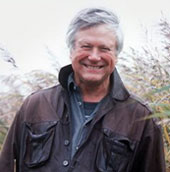
A few days later, the lovely hardback arrived. Now, first of all, when she mentioned the name 'Richard Mabey', I had no idea who he was - someone left a comment saying he was a rather well-known author so I felt a bit dim that I'd never heard of him. Googling his image (that's him, up at the top there), though, produced a reaction of "
Oh, it's
him!" as I recognised his face. God knows from where, although I've seen enough gardening shows on the telly over the years and I suspect he must crop up on them regularly. Therefore, from the fact that he's a telly-bod and has written [checks Wikipedia] or co-authored at least 66 books, I think it's fairly safe to assume he knows what he's talking about. Let's have a look at this one, then, shall we?
I immediately liked the drawing on the front cover (see above); in shades of grey and taupe it shows a plant (presumably a weed) growing in front of St Paul's Cathedral and instantly tells you that this is not going to be a scientific book but something more aesthetic.
I should own up here to the fact that I don't tend to read natural history books, I'm much more of a non-fiction and novel sort of reader so I wasn't entirely sure what to expect. In my past life I was an academic and the first thing I did on opening this book was to check at the back, and I was most pleased to see that there were eight pages of references and 10 pages of index. I like a book that purports to be imparting factual information to have a comprehensive reference section - to me it shows a decent amount of checkable research has been undertaken. So far, then, without having read a single word, I'm liking this book already.
The subject of weeds is so vast that it must have been quite tricky to decide how to structure the book and Mabey decided to go for an historical approach, starting with the Garden of Eden (he points out, for example, how often weeds/gardens appear in the creation myths of various religions) and finishing in the modern era, threading his narrative through with interesting bits of information.
Poppies appear throughout the text and, indeed, the historical timeline, and I, for one, didn't know that the ancient Sumerian word for the flower was 'pa pa', a name basically unaltered for 6000 years. Mabey's writing is very easy to read and he does have a lovely turn of phrase, for example, "Europe's earth is full of poppies and bleeds with them when it's cut" and when he describes poppies in full bloom as "...a grounded sunrise". Lovely.
Moving on into the medieval period, Mabey discusses the rise of herbalism and the fact that the medieval world viewed weeds as both a curse and a benediction - they were trouble in the soil but a cure in the sickroom. It was during this period that at least 20 different species of weed were renamed as belonging to the Devil, such as Devil's rhubarb (Deadly Nightshade), Devil's fingers (Bird's-foot trefoil), Devil's leaf (Nettle), Devil's eye (Henbane), and so on. The 'Doctrine of Signatures' was also invented, being a form of intelligent design made manifest by God making plants to look like parts of the body. In other words, humans can 'read' the plants to see which illnesses they would cure.
Moving onto the late medieval/Tudor period, Mabey writes quite a lot about the extraordinary Nicholas Culpeper, the renowned herbalist, which I found very interesting as I knew nothing about him other than he has a small shop in Guildford town centre that sells herb plants and soaps made of lavender but it turns out he was a radical thinker who upset the Establishment by writing a best-seller on how to self-medicate using plants and thereby giving away trade secrets.
As you might expect, Mabey picks up on Shakespeare's extensive use of floral imagery, much of it weeds but here I noticed one of the few mistakes that could have been picked up with more thorough proofreading - 'luscious woodbine' on p112 becomes 'luscious eglantine' on p113 - which is it? (While I'm at it, the other mistakes I found were a few repetitions of 'the the' and 'that that'. On p215 there's an incorrect "it's" and on p46 you find 'Bablylonia'. Also on that page, Mabey claims that monotheism was invented by the Jews when I would argue that the Pharaoh Akhenaten did that in about 1355BC, but then I do freelance proofreading and have a couple of degrees in Archaeology so stuff like that
would bother me, wouldn't it?)
Moving on in time, the chapter 'Gallant Soldier' discusses how plant seeds escape from botanical gardens and colonise their way across the country, often utilising rail networks and shipping to do so, and I learnt another interesting snippet here - Thanet Cress is reputed to have reached Britain in the hay mattresses of Dutch POWs captured during the Napoleonic wars. The hay was then given to farmers who spread it on fields, hastening germination. Plant seeds are, indeed, bold opportunists.
In covering Victorian attitudes to plants and weeds, Mabey discusses John Ruskin a lot. Undoubtedly extraordinarily talented, his aesthetical snobbery must have made him a real pain in the arse to be around (after all, this is the man who, it is said, on his wedding night fainted at the sight of his wife's pubes since, naturally, all those nude Greek and Roman statutes were hairless there). However, Ruskin possibly provides the most accurate criterion by which to identify a weed - its 'impertinence', i.e., its ambition. Note - this is a book that by the very nature of its discussion cannot avoid anthropomorphism and that takes the text from 'scientific' into the realms of 'philosophical'.
Mabey agrees Ruskin was a nutter by the late Victorian period but what Ruskin writes encapsulates human attitudes to weeds, that they are judged by our, human, standards and not their own (Ruskin was outraged and offended by what he saw as the moral decrepitude displayed by weeds). Although, again, this is anthropomorphism raising its head - plants have different needs (rather than 'standards' per se) to human requirements. 'Standards' implies some kind of emotional involvement - a human characteristic.
Mabey writes of William Robinson, a Victorian gardener who felt stifled by formal garden design and tried to introduce a more casual style. He developed gardens based on the way plants grew together in the wild, a very modern approach but, unfortunately he also popularised Japanese Knotweed!
Onto the twentieth century and Mabey covers plants during both wartimes. Until this book I was unaware of the heartbreakingly poignant 'trench gardening' undertaken during the First World War where soldiers would try to beautify the horrors of the trenches by transplanting weeds such as celandine and cuckoo-pint from the surrounding fields and ditches into little plots alongside the trenches. Apparently, one particular 47 yard long trench had been fitted with "basketwork and trellis ... bottlenecks and junctions had a homely atmosphere with nasturtiums climbing the trellises". And, of course, there are the poppies.
The weed that most typified the Second World War - at least in London - according to Mabey was Rosebay Willowherb, also known as bombweed or fireweed, whose pink spires and fluffy seeds soared above the bombsites, where they took advantage of the disturbed ground.
I very much enjoyed the section about the Cold War and science fiction. It seems that plants that appeared after the Second World War that were not common to a particular area - such as the Rosebay Willowherb - were often viewed as "alien" plants by the local inhabitants, with some people even going so far as to consider them to be invading enemy agents seeded by the Germans or the Japanese! This is an apocalyptic view of weeds and it wasn't until Mabey pointed it out that you realise, during the Cold War, just how much of popular culture conflates communist infiltration with plants - see, for example, Invasion of the Body Snatchers (plant pods grow clones of humans), The Quatermass Experiment (astronaut returns to Earth and basically turns into a cactus) and the most well-known of all, The Day of The Triffids. He spends a long time telling the plot of the novel which is informative especially if, like me, you've only seen the film, and he decides that John Wyndham has, in fact, created the first Superweed. And in the real world, the nearest thing we have to a Triffid is the Giant Hogweed which is tall, vigorous and has photodermatitic effects (its sap will cause skin to blister) - we should be grateful, I suppose, that it doesn't actually get up and walk around.
It seems we do, actually, have alien plant invasions for real; Mabey talks of the kudzu vine in the States (which grows so fast that people suggest shutting their bedroom windows at night to stop the vine getting in) and of the 2,500+ alien species in Australia (plants such as St John's Wort, mimosa, olive trees, blackberries, capeweed and buffel grass, all introduced by man and all going beserk). I am in agreement with Mabey here when he says we have to "find ways of incorporating these alien invaders into our lives and ecosystems" and not try to wipe them off the face of the earth in "a fit of pique or burst of herbicide".
I have no argument at all with Mabey's claim that the purpose of weeds is to "fill the empty spaces of the earth - they stabilise the soil, conserve water loss, provide shelter and begin the process of succession to more complex and stable plant systems" and I love the fact that this is beautifully illustrated by the greening of Detroit. Once the motoring industry left the city, 66,000 vacant lots (and 40 of the 139 square miles of the inner city) became overgrown as weeds took control and started to grow through brick and tarmac, rotted down and started returning everything to soil. Enterprising human inhabitants that have remained have now begun farming these lots - there's been no horrified backlash against the invasion "instead the weeds are being read as a parable, a lesson that a monolithic, oil-based urban culture is unsustainable in the 21st century, and that there might be other, more ecologically gentle ways of living in cities - families too poor to buy fresh food are starting neighbourhood organic farms on the sites of demolished local blocks". There genuinely could be hope for our future, and it's right there in Detroit.
My one real criticism is the complete lack of pictures. Apart from the gorgeous pen and ink drawings at the beginning of each chapter, there is not one illustration of any of the hundreds of plants mentioned in the book. I found I had to keep Googling the names to see if I recognised the plants under discussion. I understand the inclusion of photos can increase production costs enormously but it is deeply frustrating unless you already know what Danish Scurvy Grass or Celandine looks like, however that's my only real, genuine complaint.
The purpose of this book is to look at immensely varied motives for the control of weeds and the impact this has had on our relationships with the plant world and nature in general. This is an enormous subject area and I really think that Richard Mabey has had a good go at doing this in 292 pages. I enjoyed reading it much more than I thought I would, and I learnt some very interesting stuff on the way. If you know someone who enjoys natural history and is a keen gardener, you could do worse than get them a copy of this for Christmas.